


Toxic Plants as an Evolutionary Response to Herbivory: an Ecological and Veterinary Perspective
Keywords:
Plantas tóxicas, Herbivoría, Metabolitos secundarios, Intoxicaciones, GanaderíaAbstract
The issue of plant poisoning is a major cause of economic loss for the global livestock industry, with
significant economic implications. Conventionally, these diseases have been the focus of research from
a toxicological perspective, with the identification of toxic compounds, mechanisms of action, and
associated lesions being the primary areas of investigation. However, the synthesis of toxic compounds
by plants can be interpreted as the result of a prolonged evolutionary history of interaction with
herbivores. Due to their sessile nature, plants are unable to physically escape being consumed and have
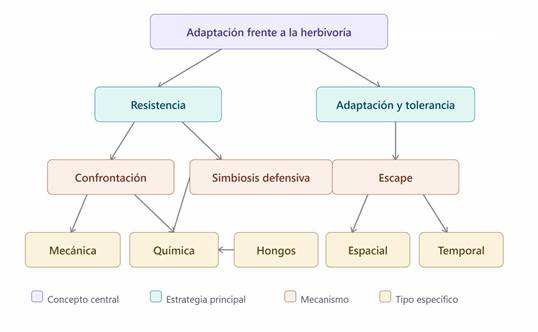
developed numerous strategies aimed at minimizing the damage caused by herbivorous animals. These
strategies encompass mechanical resistance mechanisms, chemical defences, symbiotic associations
with microorganisms, and mechanisms of spatial and temporal escape. In this context, it is evident that
plant toxins represent a highly sophisticated defensive mechanism that has been developed by plants
throughout the course of evolution. The present study reviews the main adaptive strategies of plants
against herbivory, analysing the role of plant toxicity as an evolutionary response and discussing its
implications for animal health and livestock production in South America.
ARK-CAICYT: https://id.caicyt.gov.ar/ark:/s29535441/nw7jsa9a4
Downloads
References
Ali, J. G., & Agrawal, A. A. (2012). Predator-prey interactions: a plant’s perspective. Trends in Ecology and Evolution, 27(9), 503-512.
Azorín A., J. y D. Gómez G. 2008. Estrategias de las plantas frente al consumo de los herbívoros. pp. 189-203. In: F. Fillat, R. García-González, D. Gómez & R. Reiné (eds.). Pastos del Pirineo. Consejo Superior de Investigaciones Científicas. Madrid, España.
Bernays, E. A., & Chapman, R. F. (1994). Host- Plant Selection by Phytophagous Insects. New York: Chapman & Hall. https:// doi.org/10.1007/b102508 https://doi. org/10.1007/b102508
Bryant, J. P., Chapin, F. S. III, & Klein, D. R. (1983). Carbon/nutrient balance of boreal plants in relation to vertebrate herbivory. Oikos, 40(3), 357-368. https://doi.org/10.2307/3544308
Carmona, D., Lortie, C. J., & Aubin, I. (2011). The role of plant physical defenses in herbivory. Plant Ecology, 212(1), 37-48.
Clay, K., & Schardl, C. L. (2002). Evolutionary origins and ecological consequences of endophyte symbiosis with grasses. The American Naturalist, 160(Suppl. 4), S99-S127. https://doi.org/10.1086/342161
Coley, P. D., Bryant, J. P., & Chapin, F. S. III. (1985). Resource availability and plant antiherbivore defense. Science, 230(4728), 895–899.
Cook, D., Gardner, D. R., & Pfister, J. A. (2014). Swainsonine-containing plants and their relationship to endophytic fungi. Journal of Agricultural and Food Chemistry, 62(30), 7326-7334. https://doi.org/10.1021/jf5016734
Ehrlich, P. R., & Raven, P. H. (1964). Butterflies and plants: A study in coevolution. Evolution, 18(4), 586-608. https://doi. org/10.2307/2406212
Fraenkel, G. S. (1959). The raison d’être of secondary plant substances. Science, 129, 1466–1470. https://doi.org/10.1126/ science.129.3361.1466
Hanley, M. E., & Lamont, B. B. (2005). The role of plant mechanical defenses in herbivory. Oecologia, 144(4), 479-491. https://doi. org/10.1007/s00442-005-0247-1
Hanley, M. E., & Lamont, B. B. (2005). The role of plant mechanical defenses in herbivory. Oecologia, 144(4), 479-491.
Hay, M. E. (1984). Predictable spatial escapes from herbivory: How do these affect the evolution of herbivore resistance in tropical marine communities? Oecologia, 64, 396-407. https://doi.org/10.1007/BF00379138
Herms, D. A., & Mattson, W. J. (1992). The dilemma of plants: to grow or defend. Quarterly Review of Biology, 67(3), 283-335. https://doi.org/10.1086/417659
Karban, R., & Baldwin, I. T. (1997). Induced Responses to Herbivory. Chicago: University of Chicago Press. https://doi.org/10.7208/ chicago/9780 https://doi.org/10.1007/s00442- 010-1709-y226424972.001.0001
Kawagoe, T., & Kudoh, H. (2010). Escape from floral herbivory by early flowering in Arabidopsis halleri subsp. gemmifera. Oecologia, 164, 713-720. https://doi. org/10.1007/s00442-010-1709-y
McNaughton, S. J. (1985). Ecology of a grazing ecosystem: the Serengeti. Ecological Monographs, 55, 259-294. https://doi. org/10.2307/1942578
Murray, T. D., Schroeder, B. K., Schneider, W. L., Luster, D. G., Sechler, A., Rogers, E. E., & Subbotin, S. A. (2017). Rathayibacter toxicus, other Rathayibacter species inducing bacterial head blight of grasses, and the potential for livestock poisonings. Phytopathology, 107(7), 804-815. Núñez- Farfán, J., Fornoni, J., & Valverde, P. L. (2007). The evolution of resistance and tolerance to herbivores. Annual Review of Ecology, Evolution, and Systematics, 38, 541–566. https://doi.org/10.1146/annurev. ecolsys.38.091206.095822
Rosenthal, G. A., & Berenbaum, M. R. (Eds.). (1992). Herbivores: Their Interactions with Secondary Plant Metabolites (2nd ed.). Academic Press. San Diego.
Rosenthal, G. A., & Janzen, D. H. (Eds.). (1979). Herbivores: Their Interaction with Secondary Plant Metabolites. New York: Academic Press.
Rosenthal, J. P., & Kotanen, P. M. (1994). Terrestrial plant tolerance to herbivory. Trends in Ecology & Evolution, 9(4), 145–148. https:// doi.org/10.1016/0169-5347(94)90180-5
Saikkonen, K., Young, C. A., Helander, M., & Schardl, C. L. (2016). Endophytic Epichloë species and their grass hosts: From evolution to applications. Plant Molecular Biology, 90, 665-675. https://doi.org/10.1007/ s11103-015-0399-6
Schardl, C. L., Leuchtmann, A., & Spiering, M. J. (2004). Symbioses of grasses with seedborne fungal endophytes. Annual Review of Plant Biology, 55, 315-340. https://doi.org/10.1146/ annurev.arplant.55.031903.141735
Sinclair, A. R. E., & Norton-Griffiths, M. (1979). Serengeti: Dynamics of an Ecosystem. University of Chicago Press.
Stowe, K. A., Marquis, R. J., Hochwender, C. G., & Simms, E. L. (2000). The evolutionary ecology of tolerance to consumer damage. Annual Review of Ecology and Systematics, 31, 565-595. https://doi.org/10.1146/annurev. ecolsys.31.1.565
Strauss, S. Y., & Agrawal, A. A. (1999). The ecology and evolution of plant tolerance to herbivory. Trends in Ecology & Evolution, 14(5), 179–185. https://doi.org/10.1016/ S0169-5347(98)01576-6
Wink M (2003). Evolution of secondary metabolites from an ecological and molecular phylogenetic perspective. Phytochemistry. 64(1):3–19. https://doi.org/10.1016/S0031-9422(03)00300-5
Additional Files
Published
How to Cite
Issue
Section
License

This work is licensed under a Creative Commons Attribution-NonCommercial-ShareAlike 4.0 International License.